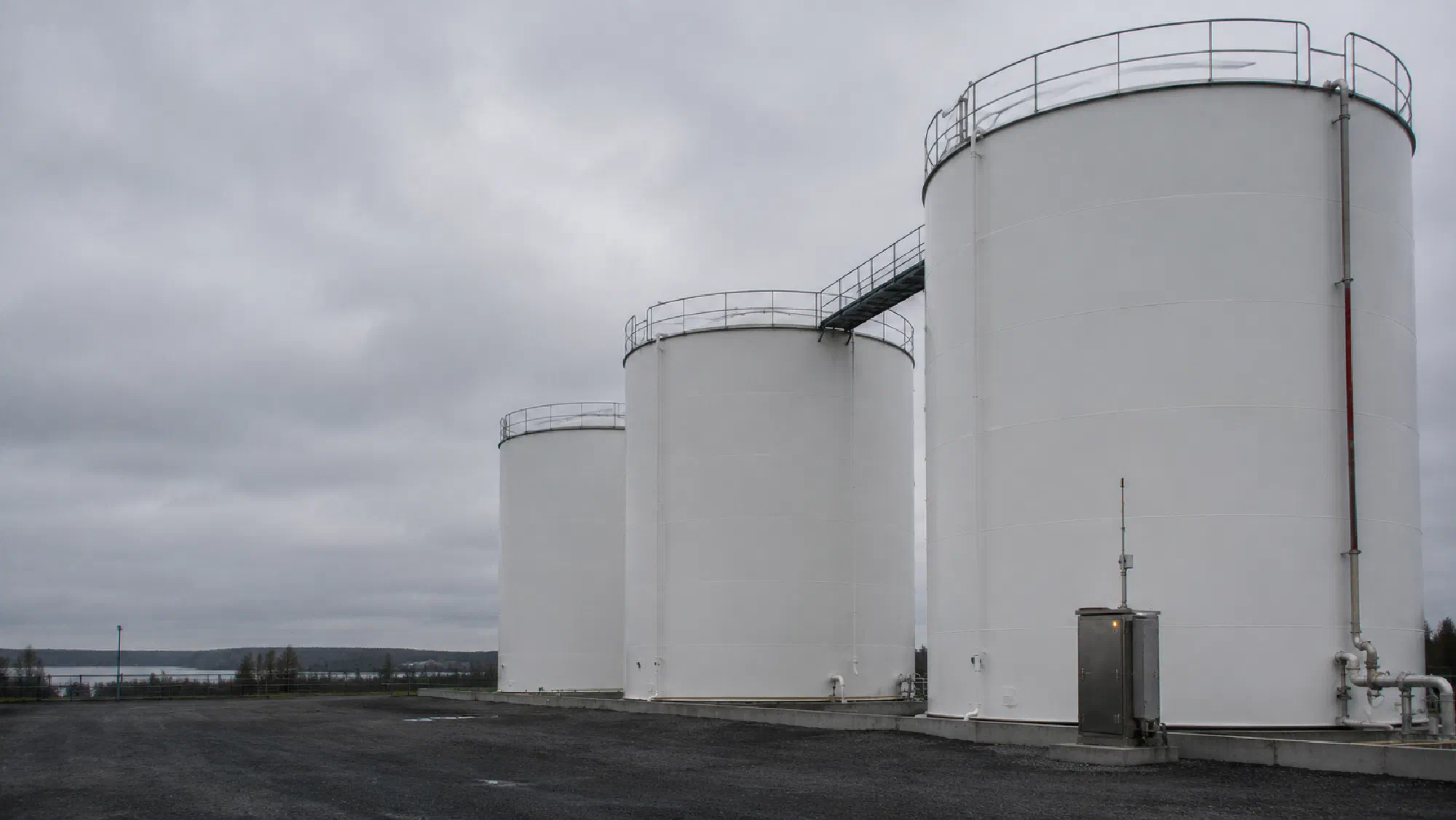
Applications — Tank Level Monitoring
From single-tank fuel-depot installations to nationwide chemical-storage networks, AutoLog® RTUs measure level, log historical data, and alarm on threshold crossings. The 16-bit analog inputs read level transmitters at the resolution custody-transfer applications demand.
Storage tanks — fuel, water, chemical, lubricants, gas — are usually located outside the operator’s main supervised plant. Without remote monitoring, somebody has to read a sight gauge once a shift; with remote monitoring, every tank reports level continuously, alarms on high/low thresholds, and logs a continuous history for inventory, regulatory reporting, and theft detection.
A typical tank-monitoring AutoLog deployment reads the primary level transmitter (radar, ultrasonic, pressure or magnetostrictive — all supported as 4–20 mA loops into the analog inputs), an optional temperature input for volumetric correction, and digital inputs for high/low level switches as a backup to the analog measurement. The GSM-RTU sends one record per minute (configurable), logs locally to nonvolatile memory between transmissions, and raises alarms on threshold crossings.
Multi-tank installations add tank-farm-level applications: aggregate inventory reporting, fill / empty tracking, density correction for fuel custody transfer, and leak-detection mass-balance against import flow meters. ControlMan™ aggregates the whole tank farm into a single inventory view with historical trends per tank.
For chemical-storage applications, the same AutoLog supervises secondary containment (pH or conductivity monitoring inside the bund) and bund-pump activation when needed. For fuel-depot applications, the integration commonly extends to the loading-rack ATG controller and the gantry overfill protection logic.
Recommended products
Compact RTU for single-tank or small-depot installations. 5× 16-bit analog inputs cover level, temperature, density and a free channel.
Explore →Built-in GSM modem and SMS alarming. Standard fit for unmanned remote tank farms.
Explore →Aggregates level history per tank, supports trend reporting, and routes threshold-crossing alarms to the operator on duty.
Explore →Tank-monitoring project?
Tell us your tank count, the level-transmitter type and your reporting requirements — we'll quote a system.
Contact engineering